
Core biotechnology is an extremely practical field. Be it admission at the top universities (India or abroad), or a high-paying job in the industry, practical skills matter a lot. India’s biotech sector is exploding, projected to hit $300 billion by 2030. But thousands of biology students face a harsh reality: classroom theory doesn’t prepare you for real labs. In this article, Shreosee Ghosh from Team SHRM Biotech writes about the top in-demand biotech skills and a roadmap to acquire them.
Shreosee’s Story as a Biotech Student
I still remember the first day I walked into a real laboratory. It was 2018, and I had just begun my undergraduate journey in Molecular Biology and Biotechnology. I had studied biology all through school, could describe cellular processes with confidence, and genuinely loved the subject. But the moment I stood before an actual lab bench, a quiet panic set in. The equipment looked nothing like the diagrams in my textbooks, and I did not know where to begin.
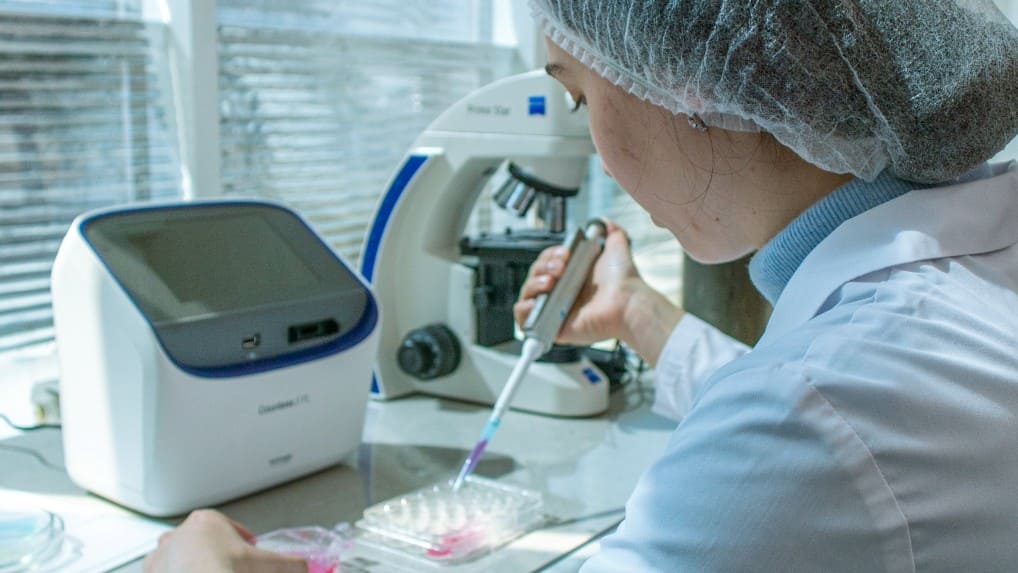
The first time I held a pipette, I got the volumes completely wrong. I did not account for the resistance in the plunger, I released too fast, and the sample was ruined. Nobody had taught me that — not in school, not in the first weeks of college. It was something you only learned by doing. That gap between textbook knowledge and real bench skills is something I felt deeply, and it stayed with me through my B.Sc. and later through my M.Sc. in Medical Biotechnology.
The Skill Gap in the Biotech Sector
I was not alone in feeling that gap, and the stakes have only grown since. India’s biotech sector is booming — the country is now among the top 12 biotech destinations globally, with the industry projected to reach $150 billion by 2025. Research institutes, pharmaceutical giants, diagnostics startups, and agri-biotech companies are all hiring — but they want candidates who can do, not just know.
Today, as a Research Coordinator at SHRM Biotechnologies, I see this same gap every day in the students who come to us — and I see firsthand what changes when they get proper, hands-on training. SHRM Biotechnologies, based in Kolkata (with a growing presence in Gurgaon), has been bridging this very gap since 2019. Through NEP-aligned training, real dissertation projects, and the newly launched SHRM Skill and Innovation Foundation, hundreds of students have leaped from theory to practice, from classroom to career — the same leap I once had to make on my own.
SHRM Biotechnologies has bridged this gap via NEP-aligned training, real dissertation projects, and the SHRM Skill and Innovation Foundation. Perfect for Class 8-12 students, college undergrads, and even parents seeking biotech career guidance for their children.
Whether you are a Class 10 student curious about lab work, a college student hunting for dissertation opportunities, or a parent wondering which path gives your child the best start — this article is your complete roadmap.
Why Practical Experience Beats Theory for Biotech Careers
India graduates 50,000+ biotech students annually, but fewer than 30% are job-ready. Curricula emphasize theory with outdated labs. Biotech firms—from clinical trials to genomics—need hands-on skills immediately.
For High School Students (Class 8-12): Early wet-lab exposure builds scientific thinking and resume strength.
For College Students: External internships and dissertations specialize you in molecular biology, immunology, or bioinformatics—beyond college limits.
SHRM’s programs, recognized by West Bengal’s Department of Science & Technology and Biotechnology, deliver skill empowerment and innovation.
Biotech Summer Programs for High School Students in India
Start in Class 8 or 10. SHRM’s Bioscience Summer Programme (online/offline in Kolkata/Gurgaon) offers real lab access for Class 8-12:
- Pipetting, solution prep, sample handling
- Lab safety and GLP protocols
- Data recording and interpretation
- Teamwork in research settings
Many students from SHRM’s 2019–2022 summer batches have gone on to secure college-level internships and dissertation projects with confidence — crediting their early exposure as the turning point.
Essential Lab-Ready Skills for Biotechnology Internships
Biotech labs prioritize these—SHRM trains them via real projects in molecular biology, genetic engineering, microbiology, immunology, clinical research, and biochemistry.
Top Technical Skills in Biotechnology to Get Industry-Ready
DNA and RNA Extraction:
The starting point of almost every molecular biology experiment. You learn to isolate pure genetic material from blood, plant tissue, or bacterial cultures — and understand why contamination at this stage can ruin everything downstream.
I remember how even pipetting accurately felt nearly impossible at first. I kept introducing air bubbles or drawing the wrong volume. It took deliberate practice and a mentor’s patient correction before it became second nature. That early struggle taught me that hands-on training, ideally starting from high school itself, builds the muscle memory and discipline that no classroom lecture ever can.
PCR (Polymerase Chain Reaction) & RTPCR (Real Time PCR):
The backbone of modern diagnostics and research. Beyond just running the machine, students learn primer design and temperature optimisation — the parts most Indian college courses skip.
Gel Electrophoresis:
Visualising DNA fragments, confirming PCR results, and interpreting band patterns — a skill tested in virtually every molecular biology interview.
Cell Culture (Microbial and Mammalian):
Working with living cells demands precision, sterility, and patience. SHRM recently installed a dedicated tissue culture setup, giving students access to mammalian cell culture, which is rare in most undergraduate institutions.
During my own M.Sc., my first few attempts at maintaining a cell line were unsuccessful — contamination crept in because I had not been thorough enough with sterile technique. Learning to slow down, to think through every step before touching anything in the biosafety cabinet, was a turning point. It is the kind of discipline that only comes from repeated, supervised practice — and the earlier you start building it, the better.
Protein Analysis (SDS-PAGE and Western Blot):
Essential for anyone interested in drug discovery, diagnostics, or biochemistry research.
Recombinant DNA Technology:
Understanding gene cloning, vector construction, and transformation — the engineering side of biotechnology.
Bioinformatics Basics:
Analysing sequences, using public databases like NCBI, and understanding how computational tools support wet-lab research.
Advanced Chromatography:
TLC (Thin Layer Chromatography) and HPLC (High Performance Liquid Chromatography) to understand analytical techniques.
Must-Have Soft Skills to Excel in Core Biotech
- Scientific writing: lab reports, research summaries, and eventually publications
- Time management within experimental workflows
- Systematic documentation and attention to detail
- Collaboration and communication in a team lab setting
Training programs at SHRM cover all of these through real project work — not simulations or virtual labs, but actual bench science in domains including Molecular Biology, Genetic Engineering, Microbiology, Immunology, Clinical Research, and Biochemistry.
Biotechnology Internships vs Dissertation Projects: Key Differences
| Aspect | Internships | Dissertation Projects |
|---|---|---|
| Duration | 1-3 months | 3-6+ months |
| Focus | Industry workflows, broad exposure | Deep research on one topic |
| Best For | Semester breaks, career exploration | Final-year UG/PG, PhD prep |
| Output | Certificate, network, skills overview | Report, publication potential |
An important advantage of external projects at SHRM: students gain access to equipment and techniques not available in most college labs — along with flexibility to work around their academic schedule.
Step-by-Step Guide to Land Biotech Internships or Dissertations in India
- Self-Assess: Pinpoint interests (e.g., molecular vs. computational biotech).
- Prep Documents: CV, SOP, teacher recommendation.
- Research Options: Prioritize real labs, NEP credit, and expert mentors like SHRM.
- Apply Early: Spots fill fast—get personalized guidance.
- Set Goals: Define techniques and outputs with your mentor.
Thrive in Biotech Labs: Habits, Challenges, and Success Stories
Daily Habits:
- Log everything in a lab notebook
- Ask “why” behind protocols
- Learn from failed experiments
- Stay punctual with prepped materials
Newbies often feel overwhelmed—treat setbacks as data. SHRM alumni publish papers, snag top internships, and land pharma jobs their peers miss.
Ready for Your Biotech Internship or Dissertation?
From Class 11 in Kolkata to BSc finals nationwide, SHRM Biotechnologies and SHRM Skill and Innovation Foundation offer NEP-aligned paths in Kolkata/Gurgaon (online/offline). Ongoing admissions for summer/winter camps, internships, and dissertations.
About Shreoshee Ghosh: Shreoshee is currently working as the Research Coordinator at SHRM Biotechnologies Pvt. Ltd. She holds a B.Sc. degree in Molecular Biology and Biotechnology and an M.Sc. degree in Medical Biotechnology. Before joining SHRM, Shreoshee worked as a Project Fellow at the Saha Institute of Nuclear Physics (SINP), Kolkata.
Featured Image Credit: Deccan Herald