
Summer break isn’t just a pause from exams and textbooks—it’s a golden window for high school students to recharge, explore new passions, and lay the foundation for future success. While chilling with friends or traveling is tempting, the weeks ahead offer a rare chance to build skills, discover your interests, and strengthen your college application profile. Whether you’re in Grade 8, 10, or 12, strategic planning can turn these months into a launchpad for personal growth and academic excellence, especially in fast-growing fields like biosciences and biotechnology.
Why High School Students Should Utilize Their Summer Vacation
Summer vacation is often seen as a time to unwind, but treating it purely as downtime can mean missing out on transformative opportunities.
School curricula in India focus heavily on theory and board exam preparation, leaving limited room for hands-on experimentation, real-world application, or deep career exploration.
By actively using this break, students can bridge that gap, prevent the dreaded “summer slide” (where academic skills regress), and gain a competitive edge that sets them apart in college admissions.
Why You Should Utilize Summer Break Effectively as a High School Student
First, summer allows focused skill-building in areas like research, data analysis, lab techniques, and emerging technologies such as bioinformatics or AI-driven drug design—skills rarely covered in school but highly valued by universities.
Second, it’s the perfect time to explore potential career paths without the pressure of regular classes. For instance, diving into biosciences can help you decide if a future in biotechnology, pre-med, or computational biology truly excites you. Read Best Biomedical and Biology Summer Programs for High School Students (Globally).
Third, colleges today look beyond marksheets; they seek students with demonstrated initiative, leadership, and real projects. Summer activities, whether structured programs, independent research, or internships, help build a compelling profile that showcases curiosity and perseverance.
Moreover, summer provides space for personal development: improving time management, boosting confidence through new challenges, and even networking with mentors and like-minded peers. In a world where top universities (IITs, IISc, or international schools) prioritize well-rounded applicants, these experiences translate into stronger essays, recommendation letters, and interviews.
Ultimately, proactive summers turn “free time” into future-proofing—equipping you with practical knowledge, a clearer sense of purpose, and the resilience needed for higher education and beyond.
How Leveraging Summer Breaks Can Improve Self-Discovery and Self-Introspection
Summer break creates the mental space high schoolers rarely get during the school year to pause, reflect, and truly understand themselves. Away from the daily grind of classes, tuitions, and deadlines, you can experiment with new activities—be it lab-based projects, coding bioinformatics tools, or analyzing real scientific data—which often reveal hidden passions and strengths you didn’t know existed.
This process of self-discovery isn’t abstract; it’s deeply practical. Trying a hands-on biosciences project, for example, might show you thrive in collaborative lab environments or love the precision of molecular techniques.
Journaling your experiences, discussing challenges with mentors, or even presenting findings can spark introspection:
- “What problems excite me?
- Where do I struggle and grow?”
Such clarity helps you articulate your story authentically in college essays and interviews—admissions officers value genuine narratives over generic achievements.
The payoff extends directly to your profile.
Universities seek students who know their “why.” Self-aware applicants who can link summer experiences to long-term goals (e.g., “My research on microbial inactivation taught me the power of applied biotech in public health”) stand out.
These reflections also build resilience and leadership—qualities that shine in extracurriculars and recommendation letters. In short, summer-driven introspection transforms vague ambitions into a focused, authentic profile that resonates with admissions committees at top institutions.
Structured Guidance: Grade-Wise Tips to Maximize Your Summer
Guidance on Utilizing Summer Breaks For Grade 8 Students
At this foundational stage, focus on broad exploration to spark curiosity. Start with 2–3 hours daily on low-pressure activities: read popular science books on biotechnology or genetics, watch educational YouTube channels on DNA, or try simple home experiments like testing food adulteration with basic kits.
Join free online webinars or short introductory courses in biology. Dedicate time to journaling: note what excites you about science.
Build habits like a daily reading routine and basic time management with a summer planner. Visit a local science museum or nature park if possible. Last but not least, do take care of your health. Make sure you are having healthy breakfasts and nutritious lunches on time. As a high school student, you should definitely prioritize nutrition for your brain health.
Goal: Discover broad interests without pressure—summer should feel fun yet purposeful.
Career Guidance on Utilizing Summer Vacations For Grade 9 Students
Now is the time to identify specific interests and build foundational skills. Enroll in short online courses on platforms like Coursera or NPTEL in introductory biotech or bioinformatics.
Start a small passion project, such as documenting plant growth under different conditions or basic data collection on local environmental issues. Volunteer for community science drives or school clubs.
Read research papers (simplified versions) on topics like microbiology. Allocate time for self-reflection: weekly reviews of what you enjoyed. Begin building a simple digital portfolio of your activities.
Class 9 is about testing the waters and gaining confidence in independent learning.
Career Advice for Grade 10 Students to Utilize Summer Breaks for College Admissions
Deepen engagement with more structured activities. Participate in introductory summer workshops or camps in life sciences. Start a mini-research assignment: analyze publicly available datasets on topics like nutrition or genetics using free tools.
Focus on skill-building – learn basic lab safety, pipetting techniques via virtual simulators, or Excel for data analysis. Explore career options through virtual college sessions.
Balance with light test prep if needed, but prioritize projects that align with your stream choice (PCB/PCM). Track progress in a journal to identify strengths. Read how to stand out as a PCB student in the age of AI.
This year’s efforts lay the groundwork for stream selection and early college profile building.
How to Maximize Your Summer as a Grade 11 Student to Improve Your Profile for College Admissions
This is a high-impact year—shift to intensive, profile-building work. Join advanced summer programs or research projects in biosciences for hands-on lab experience (DNA extraction, PCR, forensic analysis).
Related Articles:
Best Summer Programs for High School Students in India
Best Summer Research Programs for High School Students
How to Build a Strong Profile Beyond Academics: MOOCs, Research & Summer Programs
Undertake a guided research assignment lasting 8–12 weeks, aiming for a presentation or report. Lead a small team project or contribute to community science initiatives.
Prepare for competitive exams with targeted practice while weaving in extracurriculars. Network with mentors via LinkedIn or program alumni. Document everything for your college application portfolio.
Focus on depth: choose one or two areas (e.g., bioinformatics or molecular biology) to master.
Career Guidance For Grade 12 Students to Leverage Summer Break
Your final high-school summer is about consolidation and transition. Complete any ongoing research or internships and polish outputs. Aim for presentations, publications, or certificates.
Finalize college applications: refine essays highlighting summer learnings, request recommendations, and prepare for interviews. If you’ve applied, explore gap-year options or bridge courses.
Focus on advanced self-paced learning in your chosen field (e.g., AI in drug design). Mentor younger students or volunteer in science outreach to demonstrate leadership.
Use the remaining time for personal wellness and skill polishing (public speaking, data visualization).
Goal: Enter college with a strong, well-documented profile and clear direction.
How SHRM Biotech Can Help High School Students with Career Selection and College Admissions
Summer Programs for High School Students (1- 2 Weeks)
At SHRM Biotechnologies, we’ve been empowering high school students since 2019 through our flagship Biosciences Summer Program, the very initiative that started as a collaboration to extend practical training beyond college-level courses.
Our Pre-Med & Biosciences Summer Program 2026 (for Grades 8–12) offers exactly the hands-on experience that turns summer into a launchpad. Choose from offline batches in Kolkata (Madhyamgram, May/June) or online with DIY kits delivered to your doorstep, plus a potential Gurgaon offline batch.

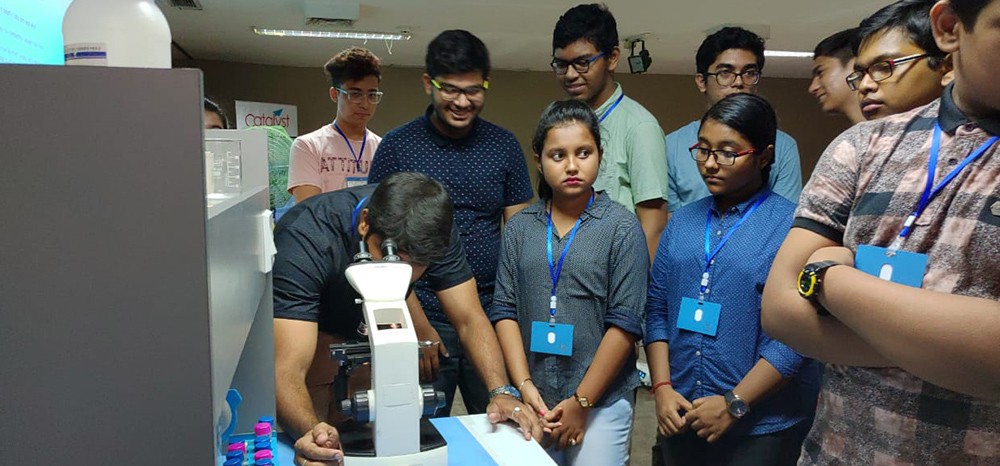
Dive into real lab work: bacterial DNA extraction, PCR, microbial culturing, forensic fingerprint analysis, food biotechnology testing, and even AI-powered drug design in our Bioinformatics track. You’ll receive career guidance, profile-building sessions, and a certificate that strengthens college applications.
Research Projects for High School Students (3 – 4 Months)
Complementing this are our School Research-Based Assignments—12–16 week projects under expert mentorship in molecular biology, bioinformatics, forensic science, and more. Students work on authentic research, data analysis, presentations, and often publish papers in journals.
Our success stories speak volumes: past participants like 9th-grader Vemuri Sritejas (copper nanoparticles research), Naysa Srivastava (Huntington’s Disease drug targeting), and Ria Panayanchery (Biology of Aging and E. coli inactivation) have published work, secured top admissions, and gained unmatched clarity on their biology and biotech career journeys.
Introducing SHRM Skill and Innovation Foundation
We’re also excited about our new SHRM Skill And Innovation Foundation (Section 8 Company), focused on skill empowerment, innovation, research, and incubation.
Summer is what you make of it. By blending rest with purposeful action—exploring biosciences, reflecting deeply, and taking guided steps—you’ll return to school not just refreshed, but transformed. Start planning today; the right experiences can unlock doors you never imagined.
Check out details and register for the Biosciences Summer Program 2026, and explore research projects. Early-bird discounts are live; don’t miss your chance to turn this summer into your strongest profile builder yet.
Author Bio: Tanmoy Ray is an admission consultant, content strategist, and former research scientist with a global academic portfolio. After earning his Master’s in the UK, he went on to work at the University of Oxford (UK), Utrecht University (Netherlands), and the University of New South Wales (Australia). He pivoted in 2015 into higher-education counselling and content marketing. Today, he helps students and professionals navigate admissions abroad while producing insight-rich content for career growth.