
Biotechnology is rapidly moving away from traditional “wet‑lab‑only” workflows and into the world of computational modelling, data science, and AI‑driven discovery. The global AI market for precision medicine is rapidly expanding; AI will manage the analysis of multi-omic data through predictive analytics for drug design, mRNA vaccine design, etc. In this article, we will decrypt how PCB students can stay relevant in the age of AI, in the biotechnology & life sciences sectors, and beyond.
In 2026, many high school students (and their parents) are scared – is AI going to take away all the future jobs? Is Software Engineering dead? What about Biotech and Life Sciences?
Students used to opt for Biotech and Life Sciences to Stay Away from Math
Not long ago, many high‑school students chose the PCB (Physics, Chemistry, Biology) stream after Grade 10 simply to avoid Maths in Classes 11 – 12. For 15–20 years, that logic worked: biotech, life sciences, and allied fields were largely “biology‑heavy” and still very welcoming to non‑math‑heavy learners. Today, that luxury is shrinking.
Ignore Mathematics at Your Own Peril
Today, that old-age perspective can seriously limit your future opportunities. Whether you want to continue to Biotech/Life Sciences, Liberal Arts, Biomedical Engineering, Health Tech or pivot to tech-enabled industries, students with a background in PCB have the unique ability to understand the “wetware”, the biological systems that are being modelled, predicted and improved by AI/computational tools.
So how can PCB students—whether they’re eyeing Biotech, Life Sciences, Liberal Arts, or any other stream—stay relevant, employable, and even ahead of the curve in the Age of AI?
The Big Shift: Wetware Meets Software
Back in 2013, during my research days in the Netherlands (around cardiovascular biomarkers), I first saw how programming was used to analyze datasets with 60+ columns and thousands of rows in a fraction of the time it would take manually. The moment I ran a simple R script that summarized weeks of manual Excel work in seconds, it became clear: data science, statistics, and coding were becoming core skills in biomedicine.
Fast‑forward to 2015, when I shifted from cardiovascular research to cancer biology at the University of New South Wales (Australia). Progress was slow, experiments were expensive, and the “trial‑and‑error” loop was painful. Today, that same frustration is being addressed by AI tools.

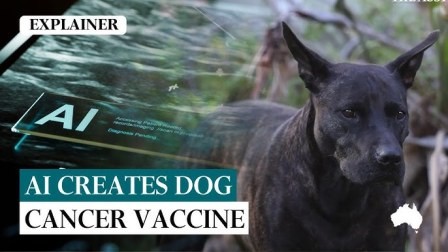
For example, Australian entrepreneur Paul Conyngham recently used ChatGPT and other AI tools alongside UNSW researchers to design a personalized mRNA cancer vaccine for his dog. The experimental treatment significantly shrank the dog’s tumours, highlighting how AI can accelerate personalized medicine, even in veterinary oncology.
The lesson is not that AI will replace biologists. The lesson is that the biologist who understands AI will outperform the one who doesn’t.
Why PCB Students Actually Have an Edge in the Age of AI
If you are a PCB Student, then you already have a significant advantage over others in this area:
Your ability to use “wetware” (the human body, cells, and molecular processes) and understanding of the human body, cells, molecules, and other natural systems will enable you to advance AI-based software solutions in various areas: medical, biotech and health tech.
Instead of trying to become a “generic software engineer”, you can position yourself as a biologist who speaks code and AI—a rare hybrid the market is desperately short of.
Here’s how this plays out in emerging fields:
1. Bioinformatics
- What it is: Using code to analyze DNA, RNA, proteins, and genomes.
- Why PCB students win: You understand genes, chromosomes, and central dogma; PCM students often treat a DNA sequence as “just text”.
2. Computational Biology
- What it is: Modelling how viruses spread, how drugs interact, or how cellular pathways behave.
- Why PCB students win: You bring biological intuition—what a “cell signalling pathway” actually means in living tissue.
3. Neuro-Technology and Brain-Computer Interfaces
- What it is: Software for devices like Neuralink‑style brain–computer interfaces.
- Why PCB students win: You understand neural pathways and neurochemistry; you only need to learn the coding syntax to map that biology into computational models.
Practical Roadmaps for PCB Students to Stay Relevant in the Age of AI
Whether you plan to stay in Biotech/Life Sciences, move into Liberal Arts, or explore career‑switch options, here are concrete pathways.
Option 1: Direct Entry into Tech (B.Tech Path)
Many top private universities in India now allow PCB students to enter B.Tech Computer Science, IT, Bioinformatics, or Health Informatics—provided they complete a Mathematics Bridge Course in the first semester.
Pioneering universities include:
- VIT (Vellore)
- SRM (Chennai)
- LPU (Jalandhar)
- Amity (Noida)
The “Niche” B.Techs:
- B.Tech Biotechnology
- B.Tech Biomedical Engineering
These programs are already 50% coding/data analysis today. From there, you can pivot into pure software engineering, data science, or AI roles if you want.
Option 2: BCA Pathway (The Practical Route)
The Bachelor of Computer Applications (BCA) is the most common route for non‑Math students (Science, Commerce, or Arts).
Eligibility:
- Most universities accept any stream after Class 12.
The goal:
- BCA focuses on building apps, websites, and software solutions rather than deep theoretical math.
- After BCA, you can pursue MCA (Master of Computer Applications), which is legally and professionally equivalent to B.Tech in the eyes of companies like Google, TCS, and others.
Option 3: The “Biology + AI” Advantage (Most Lucrative)
Instead of competing head‑on with PCM students in generic coding roles, dominate where PCM students struggle: Health‑Tech and Bio‑Tech.
You need to understand that even the PCM students need to pivot their learning roadmap. Feel free to read how aspiring software engineers need to stay relevant in the age of AI while in high school.
How to Start as a PCB Student
If you’re in Class 11 or 12, you already have a competitive advantage: you can start as an AI‑native biologist while professionals re‑learn decades of manual workflows.
1. Don’t Fear Math—Reframe It
You don’t need Class 11–12 “school math” for every coding job, but you will eventually need:
- Discrete Mathematics (logic, sets, graphs)
- Statistics (for data analysis and AI)
What to do now:
- Start with Khan Academy, YouTube, or free MOOCs on basic statistics and probability.
- Focus on concepts, not exams.
2. Learn Python (Your Bridge to AI)
Python is the bridge between biology and AI.
Goal: Be able to write simple scripts that:
- Read DNA sequences
- Analyze numeric data
- Plot graphs
Start with these libraries:
- Biopython: “Swiss Army Knife” of biology (DNA reading, NCBI database access, protein analysis).
- Pandas: Super‑charged Excel for genomic data, clinical trials, and biotech datasets.
- Matplotlib / Seaborn: Turn raw data into 3D protein models, heatmaps, and gene‑expression plots.
3. Get Your Hands Dirty with Real-World Projects while in High School
You don’t need to be a “coder” to start. As a PCB student, you are a biological data scientist in training.
Here are three starter projects you can try this weekend:
Project A: DNA‑to‑Protein Translator
- Logic: Transcription and translation (central dogma).
- Python version:
- Input a DNA string like ATGCGTACT.
- Convert it to mRNA (AUGCGUACU).
- Find the amino‑acid sequence (e.g., Met‑Arg‑Thr).
- Why it’s cool: You’re literally running the central dogma on your laptop.
Project B: GC‑Content Scanner
- Logic: High GC‑content regions are often gene‑rich or structurally stable.
- Python version:
- Download a DNA file (e.g., of a virus like Influenza).
- Write code to scan the sequence and highlight GC‑rich “hotspots”.
- Why it’s cool: This is exactly how scientists identify genes in new viruses.
Project C: Viral Evolution Visualizer
- Logic: Compare two viral strains and see which bases changed.
- Python version (using Biopython):
- Align two DNA sequences of different virus variants.
- Print or highlight the positions that differ.
- Why it’s cool: You’re doing sequence alignment, the same tech used to track global pandemics.
Your PCB Background Is Now a Superpower
Biotechnology is no longer just a “biology‑only” career. It is rapidly becoming a biology + data + AI + hardware domain.
There are many coders out there who are part of a fast-paced, cutting-edge lab. However, not everyone possesses a deep understanding of mitochondria or CRISPR technology (biogenetics). Companies developing artificial intelligence to cure cancer need professionals who can help their machines understand biology. That is where you come in.
Regardless of whether you choose to remain strictly in the Biotech sector, transition to Liberal Arts with a scientific component, or combine the two (via Health-Tech / AI), now is the time to start developing hybrid (science+computational) skills. The students who combine their intuitive knowledge of biology with computational tools will shape the upcoming decade of innovation.
Author Bio: Tanmoy Ray is an admission consultant, content strategist and former research scientist with a global academic portfolio. After earning his Master’s in the UK, he went on to work at University of Oxford (UK), Utrecht University (Netherlands) and University of New South Wales (Australia), he pivoted in 2015 into higher-education counselling and content marketing. Today, he helps students and professionals navigate admissions abroad while producing insight-rich content for career growth.
References: 1, 2, 3, 4, 5, 6, 7.
Acknowledgement: This article has been published with inputs from the Team SHRM Biotech.