

Most of us first meet biology by watching it. We notice patterns, compare samples, and see how conditions change outcomes. Synthetic biology starts from a different question: instead of only studying what biology does, can we design a living system to carry out a function we choose?
What is Synthetic Biology?
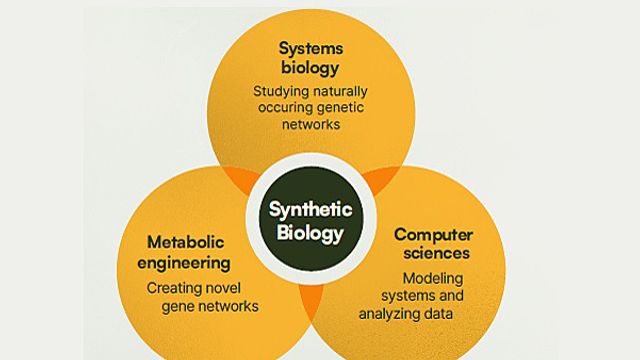
Synthetic biology considers living organisms as a kind of engineering project. It takes engineering principles of design, fabrication, testing, and iteration and applies them to biological elements.
Synthetic biology is a multidisciplinary field that applies engineering principles to design, construct, or redesign biological parts, devices, systems, and organisms. Often viewed as “genetic engineering 2.0,” it moves beyond editing existing DNA to writing new genetic code and biological pathways from scratch.
– Wikipedia
For instance, students already learn about DNA, RNA, and protein in biology; the addition of synthetic biology involves design principles in this process.
In synthetic biology, you have an idea about the function and then proceed to the selection and assembly of the biological components, which are then inserted into a host organism and assessed for results.
The process of designing, building, testing, and learning is referred to as the DBTL methodology. Failure is regarded as an object of study, rather than an end of the experiment.
Why It Matters
Synthetic biology is essential due to the numerous products we depend on, such as medicines, enzymes, materials, and diagnostics, which can be produced more efficiently or sustainably through designed biology.
Instead of asking, “What capabilities does this organism have already?” the question becomes, “Which functions do we require, and in which way can a biological system be designed to perform them?”
Scientists are now using this method in laboratories and companies worldwide, introducing revolutionary solutions across healthcare, agriculture, and manufacturing sectors.
Applications in Industry
In industry, engineered microorganisms produce enzymes that break down agricultural waste or convert plant material into useful chemicals. The same logic has long been used to manufacture insulin and other therapeutic proteins in bacteria or yeast. Companies are developing microbes that make bio-based dyes, alternative fibres, or specialised oils, reducing reliance on conventional chemical processes. In agriculture, biological systems are being explored to improve nutrient use or valorise waste streams. In diagnostics, simple biological reporters can produce a visible or measurable signal when a particular condition is present. These applications begin with a clear problem and a measurable definition of success, not with a long list of techniques.
Building a Curious, Engineering Mindset
Synthetic biology encourages students to stay curious while learning to think like engineers. They practise distinguishing a biological problem from a proposed solution, identifying which variables matter, and deciding what output would count as evidence of success. They also learn that conditions shape results, and that sequencing DNA after construction is how we check whether the physical construct matches the intended design.
When a test does not give the expected result, the useful questions become:
Was the sequence correct?
Was expression sufficient?
Were the conditions suitable?
Was the assay appropriate?
These habits – clear problem definition, testable design, measurement, and iteration – are valuable whether a student later studies biology, engineering, medicine, or another field.
What Students Gain in the Winter Biosciences Program
The Winter Biosciences Program 2026, run jointly by SHRM Biotechnologies and Anvaya, is designed for Grades 8–11. Each day builds on the previous one, moving from observation and evidence toward design-oriented thinking. Sessions are live and interactive, typically three to four hours, and include home-lab kits so students can carry out short experiments themselves.
The emphasis remains on understanding rather than on advanced protocols. Students leave with clearer scientific habits, practice in design reasoning, and exposure to how biology is used in industry and research.
Parents often value the structured progression and the chance for students to see biology as something they can reason about and contribute to.
Day 4: From Observation to Design
Day 4 opens with a short bridge from earlier evidence activities, then introduces synthetic biology as an engineering approach.
Students walk through the DBTL cycle with a simple example: designing a microorganism to produce an enzyme that helps break down a selected substrate. They see how one would choose a gene and expression strategy, place the DNA sequence into a vector, measure activity, and then ask what the result reveals about sequence, expression, conditions, or the assay.
Students complete a Synthetic Biology Design Card that asks for the problem, desired function, biological component, conditions, measurable output, test method, possible problems, and next design change.
In a short design sprint, groups work on one challenge, such as an enzyme for agricultural waste valorization or a visible reporter under a defined condition.
Finally, students will deliver a three-minute pitch. The goal is clear design reasoning, not a full laboratory protocol.
Join the Winter Biosciences Program
If you would like your student to experience this progression from careful observation to the beginnings of design thinking, the Winter Biosciences Program offers a supported way to do so. The first batch begins on 14 December, with a second batch following later in the month. Both are online, for students in Grades 8–11, with live sessions and home-lab kits included.
Seats are limited. So, register now!
To register or request the latest curriculum outline and batch details, visit the SHRM Biotechnologies website or write to training@shrmbio.com or info@shrmbio.com.
Early registration helps ensure the kit arrives in time for the first session. Biology is often taught as a subject we watch. On Day 4, we begin to treat it, carefully and thoughtfully, as a system we can also design.
Author Bio:

Dr. Lavanya Bhagavatula is the Founder and CEO of Anvaya Biotech. She holds a PhD from the University of Perugia, Italy, while her research was conducted at Imperial College London, UK. She has previously worked at IISER Bhopal, SAGE University, and CCMB. She has also been associated with iGEM and iKounsellor.
This article has been co-authored and edited by Tanmoy Ray.